
Are Silicon-Anode Batteries the Next Big Leap for Electric Vehicles?
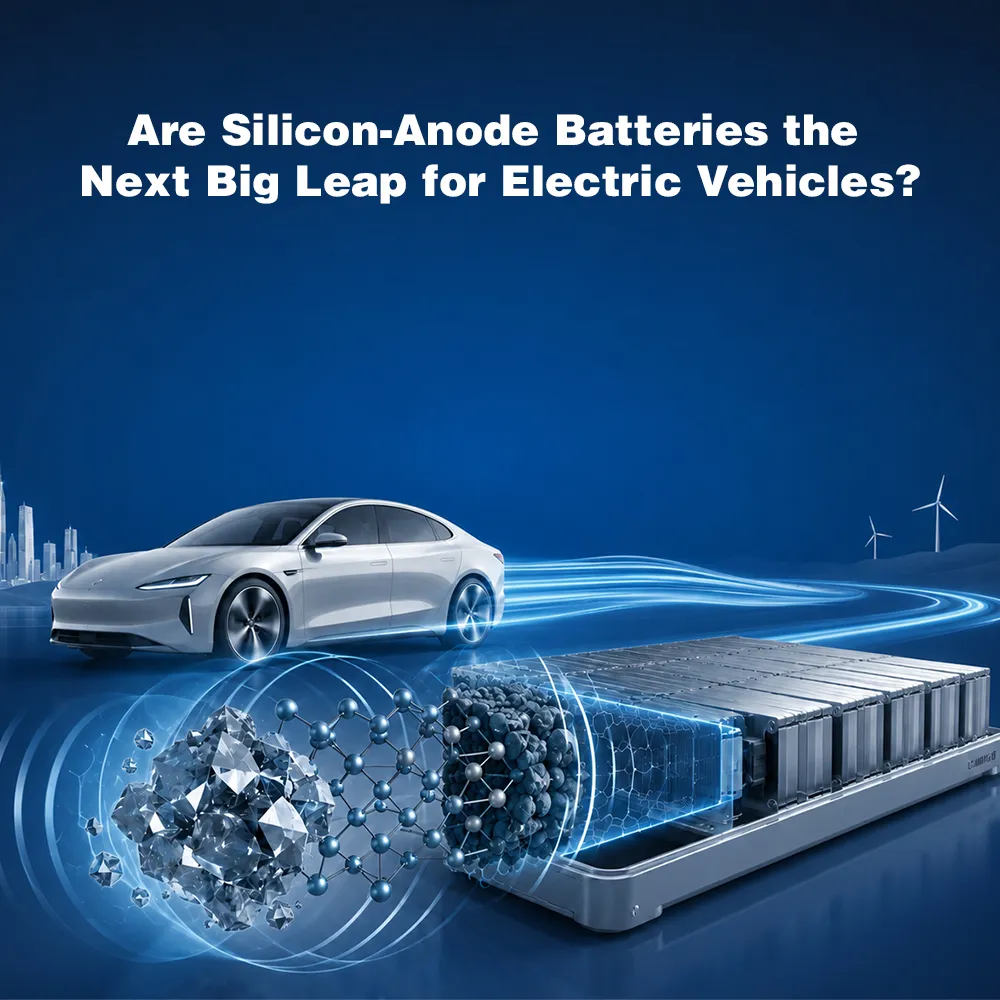
Silicon-anode batteries are one of the most promising advances in electric vehicle technology. They deliver what EV buyers want most: greater range, faster charging and more efficient battery packs. But they are not magic batteries, and they are not a full replacement for lithium-ion technology. They are more likely to be the next major upgrade inside it.
Key Takeaways
- Silicon stores far more lithium than graphite, the standard anode material in today’s lithium-ion batteries.
- The main challenge is expansion: silicon swells during charging, which can damage the battery over repeated cycles.
- Most near-term EV batteries will use silicon blended with graphite or carbon, not pure, unmodified silicon.
- Expect meaningful gains in range, charging speed and pack-level energy density or packaging efficiency in premium and then mainstream models.
- Silicon-anode technology is likely to reach wider EV use sooner than many solid-state designs because it can integrate more easily into existing lithium-ion manufacturing, and it is already entering early commercial applications.
What Are Silicon-Anode Batteries?
In simple terms, a silicon-anode battery is a lithium-ion battery that incorporates silicon in the anode, the part of the battery that stores lithium ions while charging.
Traditional EV batteries use graphite anodes. Graphite is stable, proven and relatively easy to manufacture. Silicon, however, has much higher energy storage potential. It can hold much more lithium in the same space, which is why battery researchers, carmakers and material suppliers are paying close attention.
Think of graphite as a spacious but limited single-level car park and silicon as a cleverly engineered multi-storey version in the same footprint. The result is significantly more energy in a similar space.
Silicon vs Graphite Anodes: What Is the Difference?
| Feature | Graphite anode | Silicon-anode material |
| Commercial maturity | Very mature | Emerging, scaling rapidly |
| Energy storage potential | Baseline | Up to ~10x theoretical anode capacity; practical cell-level gains are much lower and depend on silicon content and full cell design |
| Stability | Excellent | Improved via composites & coatings |
| Main challenge | Supply chain and energy density limits | Volume expansion, cracking & cycle life |
| Likely EV use | Standard lithium-ion cells | Blended silicon-graphite or silicon-carbon cells |
The main reason silicon matters is capacity. Silicon can theoretically store around ten times more lithium than graphite, although real batteries never achieve the full theoretical number in everyday driving conditions. The practical target is not a tenfold EV range increase. It is more realistic to expect better energy density, faster charging and more design flexibility.
However, faster charging is not determined by the anode alone; cathode chemistry, electrolyte formulation, cell design, temperature control, lithium-plating risk and BMS strategy also matter.
Will Silicon-Anode Batteries Increase EV Range?
Short answer: yes, but gradually.
A silicon-rich anode can help a battery cell store more energy without increasing its physical size. For an EV, that creates three possible benefits:
- More driving range from the same battery pack size.
- A smaller, lighter pack with similar range.
- Extra room for thermal management, safety systems or vehicle design improvements.
For everyday drivers, this could mean fewer charging stops on long trips. Compact EVs may benefit by offering useful range without becoming too heavy or expensive. Larger SUVs, taxis and commercial vehicles could also benefit from higher energy density, which may reduce downtime and improve daily operating efficiency.
Still, range is not decided by the anode alone. The cathode chemistry, cell design, battery management system, vehicle weight, tyres, climate and driving style all matter.
Why Does Silicon Swelling Matter?
The great strength of silicon is also its weakness. When silicon absorbs lithium, it expands dramatically. When the battery discharges, it contracts. Repeating this cycle can fracture particles, disturb the protective layer inside the cell and reduce capacity over time.
This is the key reason pure, unmodified silicon anodes are difficult. A battery that performs brilliantly in a laboratory but fades too quickly after repeated charging is not good enough for an EV owner who expects years of dependable use.
Companies are solving this with:
- silicon-carbon composites,
- nano-structured silicon particles,
- flexible binders,
- protective coatings,
- optimized electrolytes,
- advanced battery management systems.
The aim is not simply to add silicon. The aim is to make silicon behave well inside a commercial battery cell.
Are Silicon-Anode Batteries Already Used in EVs?
Silicon is already used in small amounts in many lithium-ion batteries, including consumer electronics and some advanced mobility applications. In EVs, the industry is moving gradually from low-silicon additives towards higher-silicon anode materials, but high-silicon automotive cells are still being scaled and validated carefully.
Some technologies are already used in premium devices, aviation, or specialised applications, while EV-scale production, validation and supply are still being expanded carefully.
This matters because EV batteries need much more than impressive lab results. They must pass safety tests, last thousands of cycles, perform in hot and cold climates, and be produced at huge scale.
Silicon-Anode vs Solid-State Batteries
Many people confuse silicon-anode batteries with solid-state batteries. They are related to future battery development, but they are not the same.
A silicon-anode battery changes the anode material inside a lithium-ion cell. A solid-state battery changes the electrolyte, replacing the liquid electrolyte with a solid or semi-solid material.
| Technology | What changes? | Main promise | Main challenge |
| Silicon-anode | Anode material | Higher energy density and faster-charging potential | Managing expansion & durability |
| Solid-state | Electrolyte | Potential safety benefits and higher energy density | Manufacturing scale & cost |
| Traditional lithium-ion | Mature cell design | Reliability & cost | Range & energy density limits |
The important point is that silicon-anode batteries may reach more vehicles sooner because they can integrate into today’s lithium-ion manufacturing. Solid-state batteries may offer bigger long-term changes, but they need larger production adjustments.
Are Silicon Batteries the Future of Electric Cars?
Silicon-anode batteries are likely to be part of the future, not the whole future.
The next generation of EV batteries will probably be a mix of improvements: better anodes, better cathodes, smarter software, improved thermal management and more efficient vehicle platforms. Silicon is one of the most promising pieces of that puzzle because it targets a real bottleneck: how much energy a cell can store in limited space.
For car brands and battery companies, including Suzuki in the wider automotive battery ecosystem, the practical role is not just technology adoption. It is also consumer education. Drivers need clear explanations of what new battery terms mean, what they change in daily ownership, and what claims should be treated cautiously.
A buyer should not have to understand electrochemistry to know whether a battery is reliable, safe and suitable for their driving needs.
What Should EV Buyers Expect in the Next Few Years?
Steady, meaningful progress, not a sudden overnight switch.
Premium models are likely to adopt silicon-rich anodes first for longer range or faster charging. Mass-market vehicles are expected to follow as costs fall and supply scales. The most common near-term form will probably be silicon blended with graphite or carbon, rather than a pure, unmodified silicon anode.
For buyers, the useful questions are:
- Does the battery offer better real-world range, not just laboratory figures?
- How fast can it charge repeatedly without harming long-term health?
- What is the warranty?
- How does it perform in hot, cold or humid climates?
- Is the technology proven at vehicle scale?
These questions matter more than the battery label itself.
Why Silicon-Anode Batteries Matter for Mass-Market EV Adoption
Mass-market EV adoption depends on confidence. People want vehicles that are affordable, practical and easy to live with. Battery anxiety is not only about range; it is also about charging time, battery ageing, resale value and repair cost.
Silicon-anode batteries help by giving manufacturers more options. A city EV could use a smaller pack and stay affordable. A family SUV could gain extra range without becoming too heavy. A taxi or delivery vehicle could charge faster and spend more time working.
That is why silicon-anode technology is important. Not because it solves every EV challenge, but because it improves one of the most expensive and space-limited parts of the vehicle.
The winners will not be the companies that simply add the word “silicon” to a battery specification. They will be the ones that make silicon durable, safe, affordable and scalable. For EV buyers, that is the real breakthrough: not a dramatic battery headline, but a car that goes further, charges faster and remains trustworthy for years.
FAQ
-
-
Silicon-anode batteries are lithium-ion batteries that use silicon (often blended with graphite or carbon) in the anode to achieve higher energy density.
-
-
They can be better for range and charging performance, but only if swelling, durability and cost are well managed.
-
-
No – they enhance them. Most silicon-anode batteries are still lithium-ion batteries. Silicon improves the anode rather than replacing the entire battery system.
-
-
The main disadvantage is volume expansion during charging. Silicon can swell, crack and lose performance if it is not engineered properly.
-
-
Silicon-carbon batteries are a common type of silicon-anode battery. Carbon helps stabilise silicon and reduce durability problems.
-
-
Premium and specialised applications are likely to adopt them first. Broader rollout use will depend on cost, safety, cycle life and large-scale supply.
-
-
Yes — but with a realistic definition of “leap”. Silicon-anode batteries are not a fantasy technology waiting decades away, and they are not a miracle cure for every EV limitation. They are a practical, powerful upgrade to lithium-ion batteries that could improve range, charging speed and vehicle efficiency.