
How Often Should You Replace Your Car Battery and How to Safely Replace It
Replacing a car battery is a straightforward maintenance task that ensures your vehicle remains reliable and ready to start. Whether you use a conventional lead–acid starter battery or an advanced design, correct installation is crucial to avoid electrical damage, maintain performance, and extend battery life.
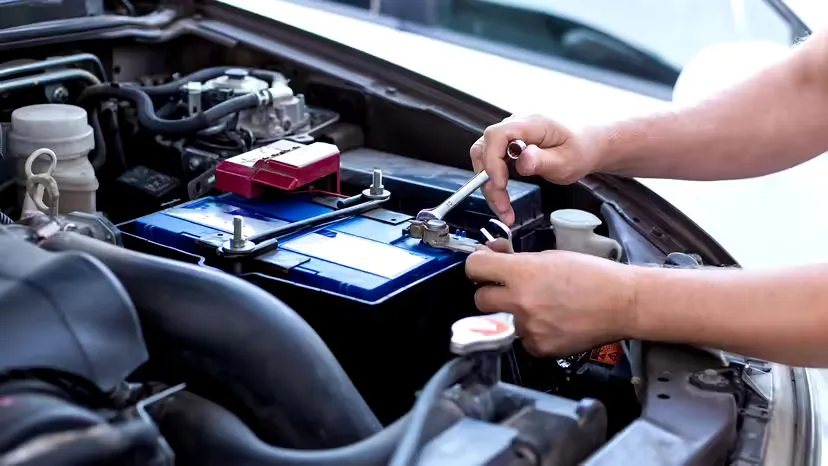
This guide outlines how to replace your car battery safely, from recognising when replacement is necessary to installing the new unit correctly. It also includes best practices for safety, maintenance tips, and answers to common questions — helping you avoid costly mistakes while keeping your vehicle in peak condition.
1. When to Replace Your Battery
Most lead–acid car batteries last 3–5 years under normal driving conditions. In mild climates with proper care, some may last longer, but exceeding 10 years is rare.
However, in tropical climates like Singapore, the extreme heat accelerates internal corrosion and electrolyte evaporation. This often reduces the actual lifespan to just 12–18 months.
Signs your battery may need replacing:
- Slow or laboured engine cranking.
- Dim headlights or flickering dashboard lights.
- A “Battery” or “Check Engine” warning light.
- Visible swelling or corrosion on the battery case or terminals.
Quantitative Health Checks
You can use a multimeter to check your battery’s health. Use the following voltage benchmarks as a guide:
| Voltage Reading | Battery Status |
|---|---|
| 12.6V or higher | Fully Charged |
| 12.2V to 12.4V | Partially Discharged / Needs Charging |
| Below 12.2V | Discharged or Suffering from Sulfation |
Checking the Date Code
If you are unsure of the battery’s age, look for the manufacturer’s date code. This is typically a 4-digit code where the first two digits represent the week and the last two represent the year (e.g., “3623” means the 36th week of 2023).
2. Why Batteries Fail Prematurely
Understanding why a battery dies early can help you prevent the same issue with your new unit.
Acid Stratification
Frequent short city trips prevent the battery from fully charging. This leads to acid stratification, where heavier acid settles at the bottom of the battery, causing uneven wear and premature failure.
Parasitic Drain
Modern vehicles feature “vampire draws” from alarms, keyless entry systems, and memory seats. These parasitic drains can flatten a battery during periods of inactivity, especially if the vehicle is left parked for several days.
3. Tools You Will Need
Before starting, prepare the correct tools:
- 10 mm socket wrench – for loosening terminal clamps.
- 12 mm socket with extension – for removing the tie-down bracket.
- Wire brush or terminal cleaner – for removing corrosion.
- Protective gloves and safety goggles – to protect against acid and sparks.
- Battery lifting strap or handle (optional) – to lift heavy batteries safely (typically 15–25 kg).

4. Safely Removing the Old Battery
- Locate the terminals – Positive (+) is usually red; Negative (−) is black.
- Disconnect in the correct order – Remove the negative cable first, then the positive.
- Remove the tie-down bracket – Use a 12 mm socket to free the clamp or bolts.
- Lift the battery carefully – Avoid tipping it to prevent acid spills.
5. Preparing for the New Battery
- Clean the compartment – Use a wire brush to clear corrosion from the tray and connectors. For a deeper clean, use a mixture of baking soda and water applied with a toothbrush to neutralise acid and remove stubborn deposits.
- Verify specifications – Ensure voltage (usually 12 V), Cold Cranking Amps (CCA), terminal layout, and case size match your vehicle’s requirements.
Critical Technology Warning
If your vehicle features Start-Stop technology, you MUST use an AGM (Absorbent Glass Mat) or EFB (Enhanced Flooded Battery). Installing a standard lead-acid battery in a Start-Stop system will likely result in total battery failure within a few months.
6. Installing the New Battery
- Place the new battery securely in the tray.
- Secure the tie-down bracket. This is vital because a loose battery can vibrate during driving, which shakes the active paste off the internal plates and significantly shortens the battery’s life.
- Remove terminal caps if fitted.
- Connect the positive (+) terminal first, then the negative (−).
- Tighten connections — firm but not overtightened.
7. Safety Best Practices
- Always wear gloves and goggles.
- Avoid touching both terminals with a tool at the same time.
- Never smoke or create sparks near the battery.
- Recycle the old battery at an authorised collection centre.
8. Common Mistakes to Avoid
- Reversing polarity — can damage the car’s electrical system.
- Loose terminal connections — can cause intermittent starting issues.
- Skipping corrosion cleaning — reduces conductivity.
FAQs
-
-
Most lead–acid car batteries last 3–5 years, depending on usage and climate.
-
-
It prevents accidental short circuits if your tool touches a grounded part of the car.
-
-
Many modern cars require electronic resets; check your manual or use a memory saver tool. Many vehicles use a Battery Management System (BMS) that must be re-coded to the new battery to prevent the alternator from overcharging or undercharging the unit.
-
-
To choose the correct battery, match the voltage, CCA, size, and terminal layout to your vehicle manufacturer’s specifications.
-
-
Yes, as long as the physical size and voltage match, but it may not improve performance unless required by the vehicle.
Conclusion
Replacing your car battery is a manageable task with the right preparation, tools, and safety precautions. By following the correct removal and installation steps, you can avoid electrical damage, ensure reliable starting, and extend battery life. For complex vehicles or advanced electrical systems, professional installation is the safest choice.
1. J. D. Halderman — Automotive Technology: Principles, Diagnosis, and Service, 5th Ed. (2016). ISBN-13: 9780133994612
2. D. Sclar — Auto Repair for Dummies, 2nd Ed. (2008). ISBN-13: 9780764599026
3. IEC 60095-1:2021 – Lead-acid starter batteries – Part 1: General requirements and methods of test.