
Understanding Lead-Acid Battery Codes: DIN, EN/ETN, and JIS Explained for Accurate Battery Selection
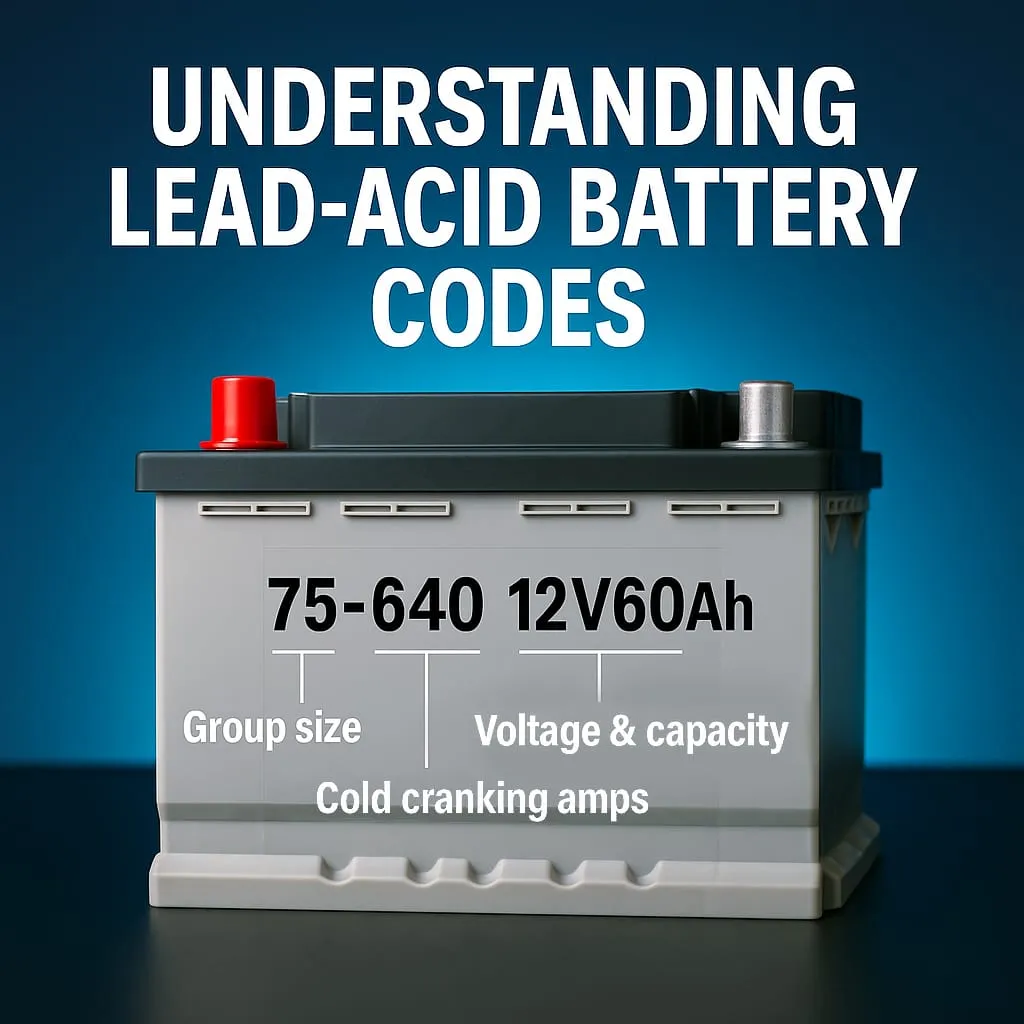
Selecting the correct lead-acid battery involves more than simply matching size and terminal positions — it requires interpreting the coding system printed on the battery label. These codes, standardised by organisations such as DIN (Deutsches Institut für Normung), EN/ETN (European Norm/European Type Number), and JIS (Japanese Industrial Standards), provide precise technical data on nominal voltage, capacity, cold-cranking performance, and specific design features.
For vehicle owners, fleet managers, and technicians, decoding these numbers ensures compatibility, dependable starting, and optimal service life — especially in extreme climates.
In hot regions, correct code interpretation helps maintain starting power despite long-term heat-related degradation; in cold climates, it guarantees reliable winter starts.
This guide explains each coding system in detail, referencing IEC 60095-1, EN 50342-1, and JIS D 5301 to ensure your battery choice is both technically correct and application-ready.
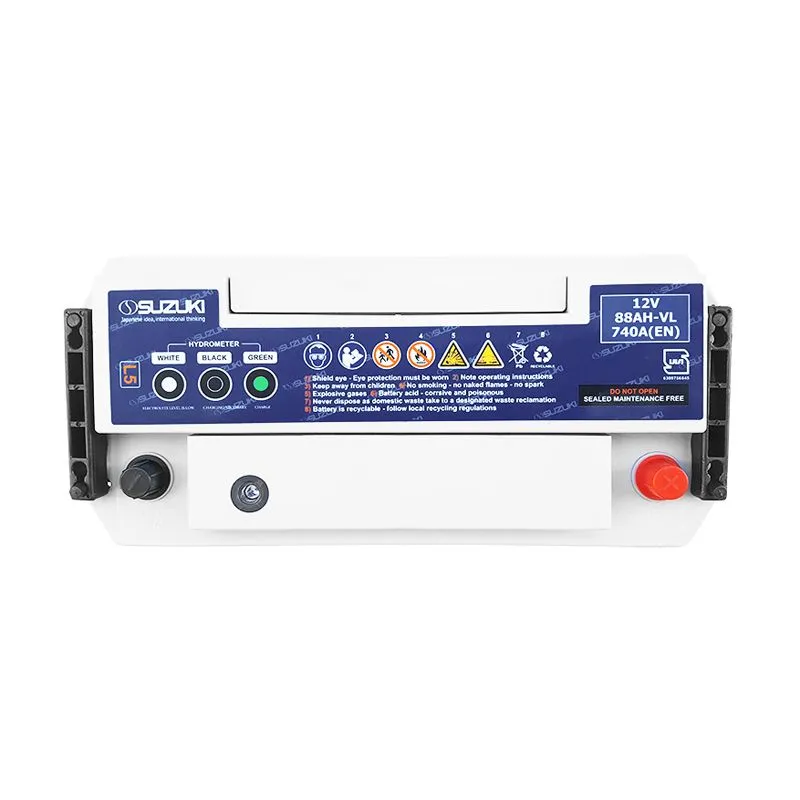
1. Why Battery Coding Matters
Battery codes act as a universal technical language between manufacturers, suppliers, and end users. They:
- Specify nominal voltage for correct electrical system matching.
- Indicate nominal capacity at the 20-hour discharge rate (C20), expressed in ampere-hours (Ah).
- Provide cold-cranking performance data for starting under extreme temperatures.
- Identify design details such as terminal type, case dimensions, hold-down configuration, and vibration resistance.
Following these standards reduces the risk of mismatched batteries, extends operational life (typically 3–5 years in automotive use), and ensures consistent performance in real-world conditions.
2. DIN Coding System
The DIN code is widely used across Europe and typically consists of five digits:
First digit – Nominal voltage
- 1, 2, 3, 4 → 6 V batteries (motorcycles, vintage vehicles).
- 5, 6, 7 → 12 V batteries (modern passenger and commercial vehicles).
Second and third digits – Capacity code
- Derived from the nominal capacity at the C20 rate (Ah) according to a DIN/EN coding table.
- The number often approximates the actual Ah value (e.g., “560” ≈ 60 Ah) but is not obtained by simple multiplication — it follows fixed increments from standard tables.
Fourth and fifth digits – Design variations
- Specify case type, terminal layout, polarity, hold-down type, vibration resistance, or other features.
Example: 560 12 → 12 V battery, nominal capacity ~60 Ah, with a specific case/terminal configuration.
3. EN/ETN Coding System
The European Type Number (ETN) extends the DIN format into nine digits and treats the first three digits as a single block representing both nominal voltage and capacity range:
- Codes beginning with 5xx → 12 V batteries with nominal capacity below 100 Ah.
- Example: 574 012 068 → 5 = 12 V, 74 = nominal capacity 74 Ah.
- Codes beginning with 6xx → 12 V batteries with nominal capacity between 100 Ah and 199 Ah.
- Example: 620 xxx xxx → 12 V, nominal capacity 120 Ah.
Digits 4–6 – Battery layout, terminal type, and case dimensions.
Digits 7–9 – Cold Cranking Amps (CCA), measured to EN 50342-1.
Cold-Cranking Amps (EN 50342-1 definition)
The maximum current a fully charged battery can supply for 30 s at −18 °C, while maintaining ≥ 7.2 V for a 12 V battery.
4. JIS Coding System
The JIS D 5301 standard, common in Asian markets, uses a combination of numbers and letters, e.g., 55B24R:
- First number – Performance Rank
A dimensionless rating calculated from both the C20 capacity and the CCA value. It measures overall electrical performance within a size class — higher numbers indicate better starting and reserve performance for that size. - First letter – Width and height code for case size.
- Two-digit number – Approximate case length in centimetres.
- Final letter – Terminal position:
- R = right-hand positive.
- L = left-hand positive.
CCA in JIS
Tested at −15 °C, which partly explains why JIS CCA ratings can differ from EN or SAE for the same battery.
5. Practical Application of Battery Codes
When selecting a lead-acid battery:
- Match voltage exactly to the electrical system (e.g., 12 V for most cars).
- Choose capacity to meet electrical demands — 50–100 Ah is typical for passenger vehicles with high accessory loads.
- Select CCA suited to climate:
- Cold climates → ≥ 600 A (EN) for reliable winter starting.
- Hot climates → Choose a battery with higher initial CCA.
- Why: Extreme heat accelerates grid corrosion, active material shedding, and water loss, all of which reduce the battery’s current-delivery capability over time. A higher starting CCA provides more performance reserve, so even after degradation the battery can still start the engine reliably for a longer period.
- Check manufacturer specifications — SAE, EN, and JIS CCA ratings are not interchangeable due to test differences.
- Verify dimensions and terminal layout to ensure proper fit.
FAQs
-
-
No. They are derived from C20 capacity but follow fixed coding tables in EN 60095-1/DIN — the value often approximates Ah but is not identical.
-
-
Different test temperatures and cut-off voltages:
* EN: −18 °C, ≥ 7.2 V after 30 s.
* SAE: −18 °C, ≥ 7.2 V after 30 s, but with different load procedure (values often ~10–20% higher).
* JIS: −15 °C. -
-
Yes — you can replace the battery if the voltage, capacity, CCA, and dimensions match.
-
-
No. Overspecifying CCA can reduce cycle life unless the battery is designed for it. Follow manufacturer recommendations.
-
-
Usually on the top label or casing, sometimes engraved near the terminals.
Conclusion
Understanding DIN, EN/ETN, and JIS lead-acid battery codes allows you to select a battery that is dimensionally correct, electrically compatible, and performance-optimised for your climate.
By decoding these labels correctly, you ensure proper fit, reliable operation, and maximum service life — whether your battery faces freezing winters, desert summers, or demanding industrial cycles.
References:
- IEC 60095-1:2021 – Lead-acid starter batteries – Part 1: General requirements and methods of test.
- EN 50342-1:2015+A1:2018 – Lead-acid starter batteries – Part 1: General requirements and methods of test
- Pavlov, D. (2011). Lead–Acid Batteries: Science and Technology. Elsevier.
ISBN: 9780444528827 - JIS D 5301:2021 – Lead-acid starter batteries
- Japanese Standards Association (JSA). (2019). JIS D 5301:2019 – Lead-acid starter batteries. Japanese Industrial Standards Committee. JIS D 5301:2019 – Lead-acid starter batteries. Japanese Industrial Standards Committee.
- SAE International. (2023). SAE J537:2023 – Storage Batteries. SAE International. https://www.sae.org/standards/content/j537_202309/